Research
Paper Review
Total Reviews
Publications
2026
- Preprint
 Reading Right, Acting Wrong: Diagnosing Decision Failures of System One Models in Agent LoopsYubo Li, Ramayya Krishnan, and Rema PadmanarXiv preprint arXiv:2610.18579, Oct 2026
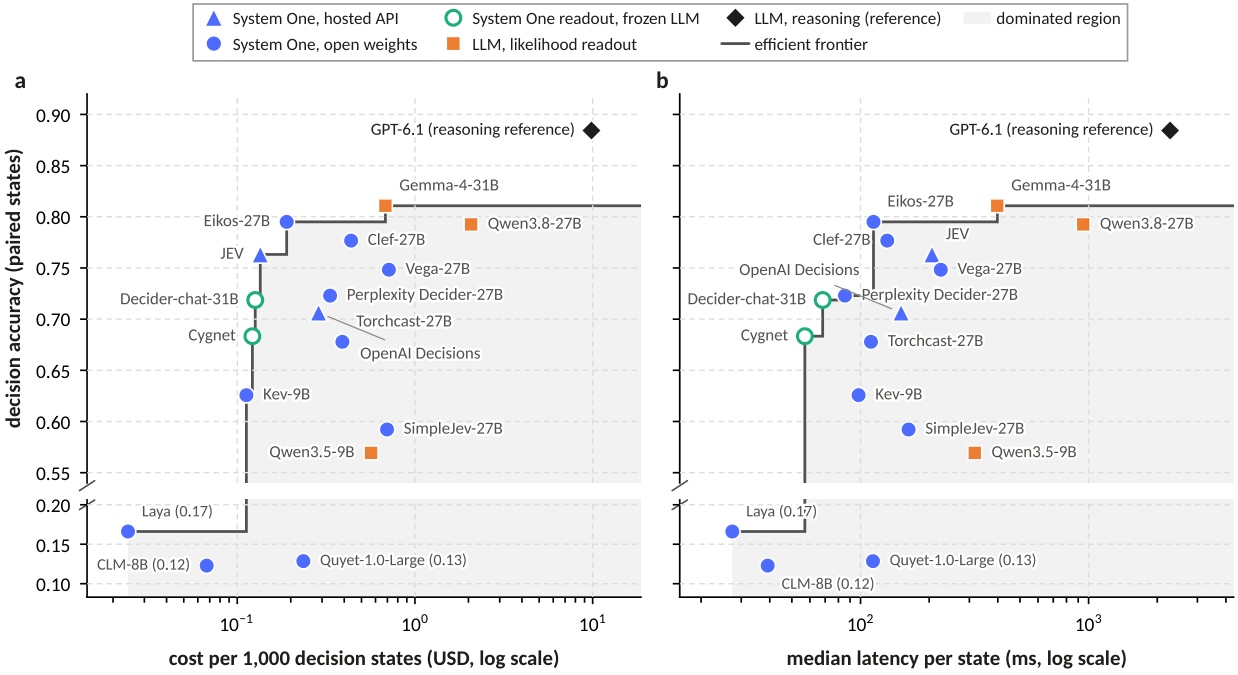
System One models choose an agent’s next action by scoring a supplied set of options in a single pass. This makes them fast and cheap, but when they choose wrongly there is nothing to inspect: did the model misread what the agent has seen, or read it correctly and still act wrongly? We answer behaviorally. On a frozen benchmark of agent decision states from simulated environments, customer-service policies, tool use, web navigation and coding, we pair every next-action question with factual probes about the same state, each answered independently. Across seventeen fast systems and a reasoning model, the answer is consistent: most wrong actions follow correct reading, and the more accurate a system, the more of its errors take this form. These errors are not noise; they gather on the same states across systems of every kind. Where the probed facts provably determine the action, models that read every fact still fail to combine them, and their own answers, composed by code, repair the failure. On real states, what is missing is often not a fact but the next sub-goal.
- Preprint
 JEV-as-a-Judge: Accept When Confident, Escalate When UnsureYubo Li, Yidi Miao, Ramayya Krishnan, and 1 more authorPreprint, under review, Sep 2026
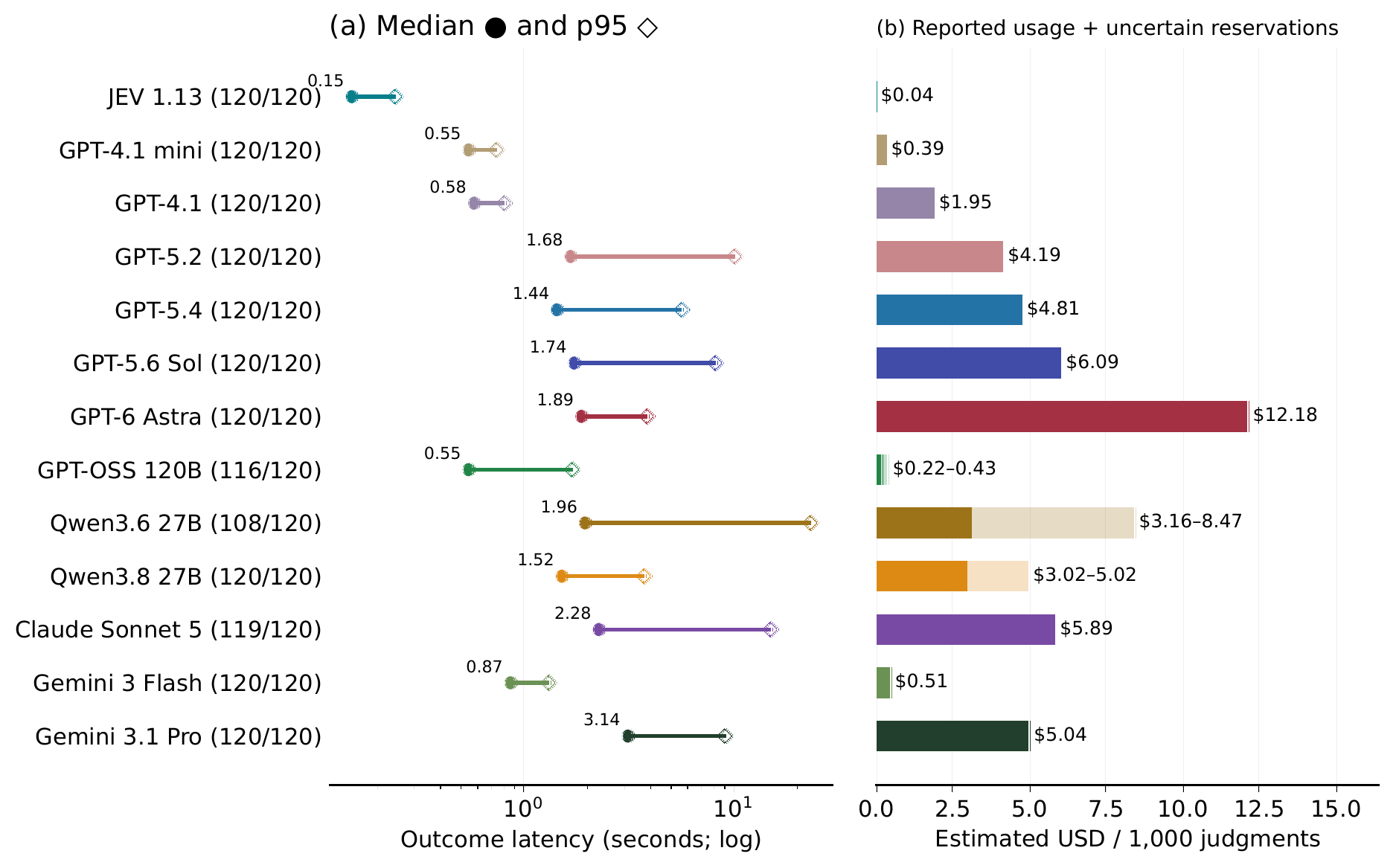
LLM-As-A-judge enables evaluation across diverse tasks, but inference cost and confidence reliability become critical at scale. We study whether a decision-only judge can provide an economical first pass and identify when stronger evaluation is needed. Comparing jev-as-a-judge with sixteen generative and reward-model judges, with blinded human adjudication, we find it within three percentage points of a state-of-the-art LLM judge, our strongest comparator, on ordinary preference and evidence-grounded factuality at 0.36% of the comparator’s fee. Larger gaps arise when judgments require checking a derivation or resisting an elaborately written wrong answer. On several benchmarks, JEV’s gap to this comparator is concentrated in low-confidence decisions. A frozen cascade that accepts confident verdicts and escalates uncertain ones retains 99% of the comparator’s accuracy at lower cost.
- Preprint
 Beyond Natural-Language Interfaces: Decisions, Scores, and Predictive DistributionsYubo Li, Ramayya Krishnan, and Rema PadmanPreprint, under review, Sep 2026
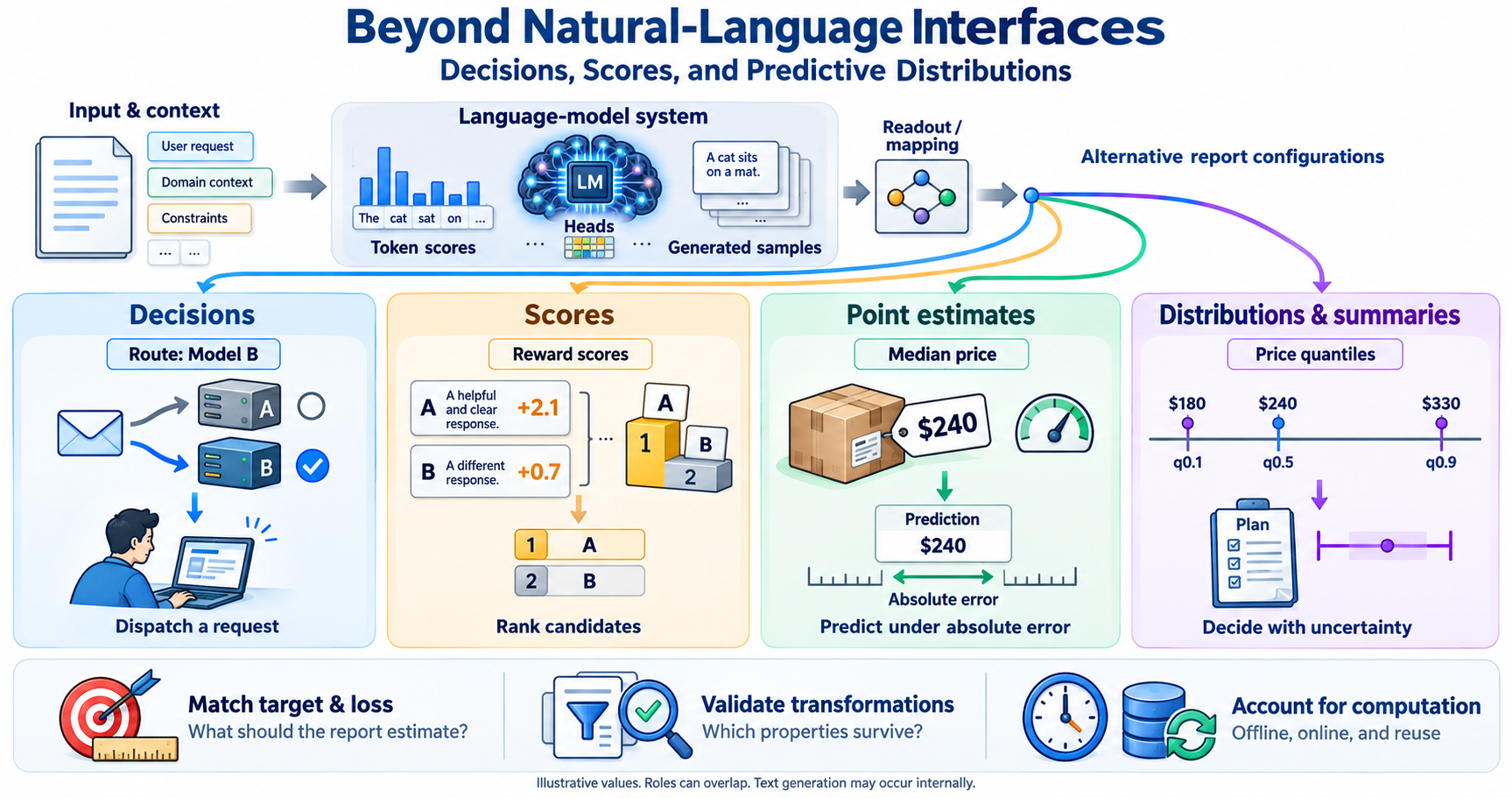
Language models increasingly supply the predictions on which other systems make decisions. For these systems, an interface defines the predictive information passed to a consumer, yet output format alone does not establish its statistical meaning or computational cost. This survey connects predictive interfaces across classification, reward and quality scoring, numerical regression, and probabilistic forecasting. We organize the literature around the target being reported, the transformations applied to a report, and the computation required to produce it. Drawing on statistical foundations and comparisons between concrete method configurations, we explain why accurate ranking need not provide calibrated probabilities, structural validity need not improve task performance, and compact outputs can conceal extensive generation. We also distinguish uncertainty about observed outcomes from uncertainty in a teacher’s generation process. These distinctions connect interface design to the information a downstream decision actually requires: an appropriate statistic may suffice for a fixed objective, while changing objectives can require richer retained reports or renewed validation. The resulting taxonomy and selection guide link predictive uses to feasible production mechanisms and the evidence needed to compare them. We propose evaluation protocols for changes in losses, constraints, and teacher processes. The unifying principle is to design interfaces around the decisions their reports must support, and to make explicit what must be revalidated when the intended use changes.
- Preprint
 Calibration-Aware Reinforcement Learning for Large Language Models: A Survey of Objectives, Optimization, and Decision-MakingYubo Li, Yidi Miao, Ramayya Krishnan, and 1 more authorPreprint, under review, Sep 2026
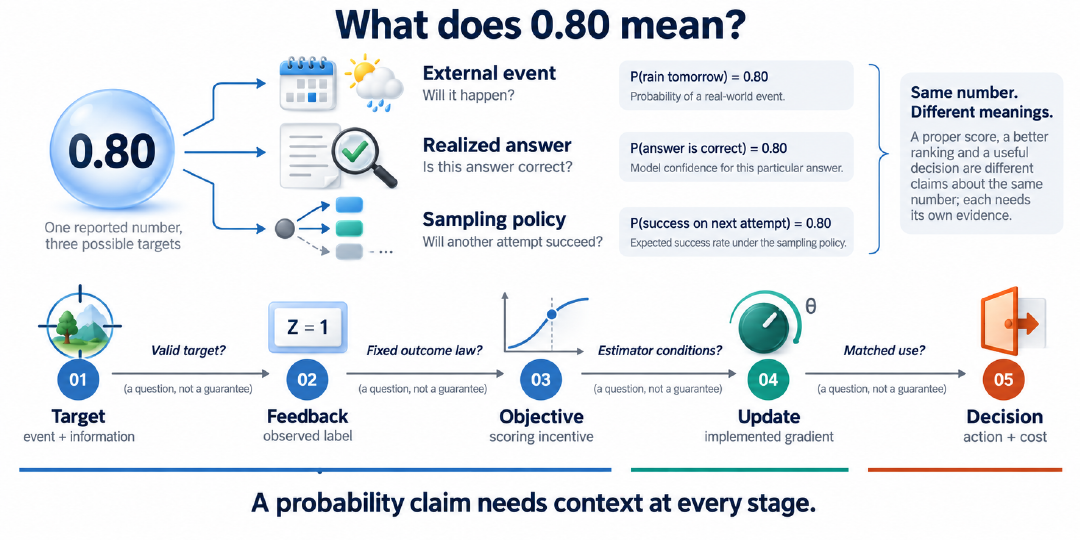
Large language models increasingly produce confidence reports, predictive distributions, and structured decisions that determine whether a system answers, abstains, retrieves evidence, or spends additional computation. Reinforcement learning can improve these signals, but it can also change the answers being assessed, the meaning of the training target, and the effective scoring incentive. We survey calibration-aware reinforcement learning through the connection between probability targets, objectives, implemented updates, and decision use. The synthesis combines a comparison of representative methods, with claims traced to primary sources, and three mechanisms for interpreting divergent results. Classical proper-score geometry separates mean capability, the distribution of conditional success probabilities, and reporting regret in joint answer-confidence training. Group transformations, parameter-dependent rewards, and finite-ensemble scoring distinguish an ideal population objective from the update actually implemented. Cost-sensitive decisions distinguish useful ordering from probability magnitudes that can be reused across operating points. These distinctions organize comparisons with post-hoc calibration, supervised reporting, selective ranking, direct action learning, and numerical distribution prediction. We provide a method landscape, an evaluation contract, and a research agenda for separating reporting improvements from policy changes, estimator effects, and threshold adaptation. The resulting perspective treats calibration as a probability claim whose conditions must remain explicit throughout learning and deployment, and identifies when RL supplies an intervention that simpler calibration methods do not.
- PreprintEpistemic Robustness of Large Language Models under Interaction: Sycophancy, Persuasion, Deception, and Belief DriftYubo Li, Ramayya Krishnan, and Rema PadmanPreprint, under review at ACM Computing Surveys, Jul 2026
Large language models are increasingly deployed as interactive advisors, yet their reliability is still evaluated statically: a prompt is posed, an answer scored. This misses a systematic failure mode—epistemic behavior changes under interaction. Models correct under neutral elicitation abandon those answers under user disagreement, false premises, or fabricated evidence, while demonstrably retaining the knowledge; conversely, they reshape users’ beliefs and trust, closing feedback loops that drift far from evidence. These phenomena sit in fragmented literatures—sycophancy, persuasion, deception, multi-turn evaluation, companion-AI harms—that rarely cite one another. We organize the field around one construct: epistemic robustness, the stability of a model’s expressed beliefs under conversational pressure carrying no evidence, paired with responsiveness to pressure that does. We distill five dissociations—knowledge from behavior, single- from multi-turn reliability, resistance from valid updating, capability from honesty, warmth from truthfulness—and provide a unified notation, a taxonomy of pressures and failure modes, a critical assessment of evaluation practice, and a mitigation map scoring interventions on both sides of the resist–update balance. We close by treating epistemic robustness as a first-class evaluation axis alongside capability and safety.
- TMLR
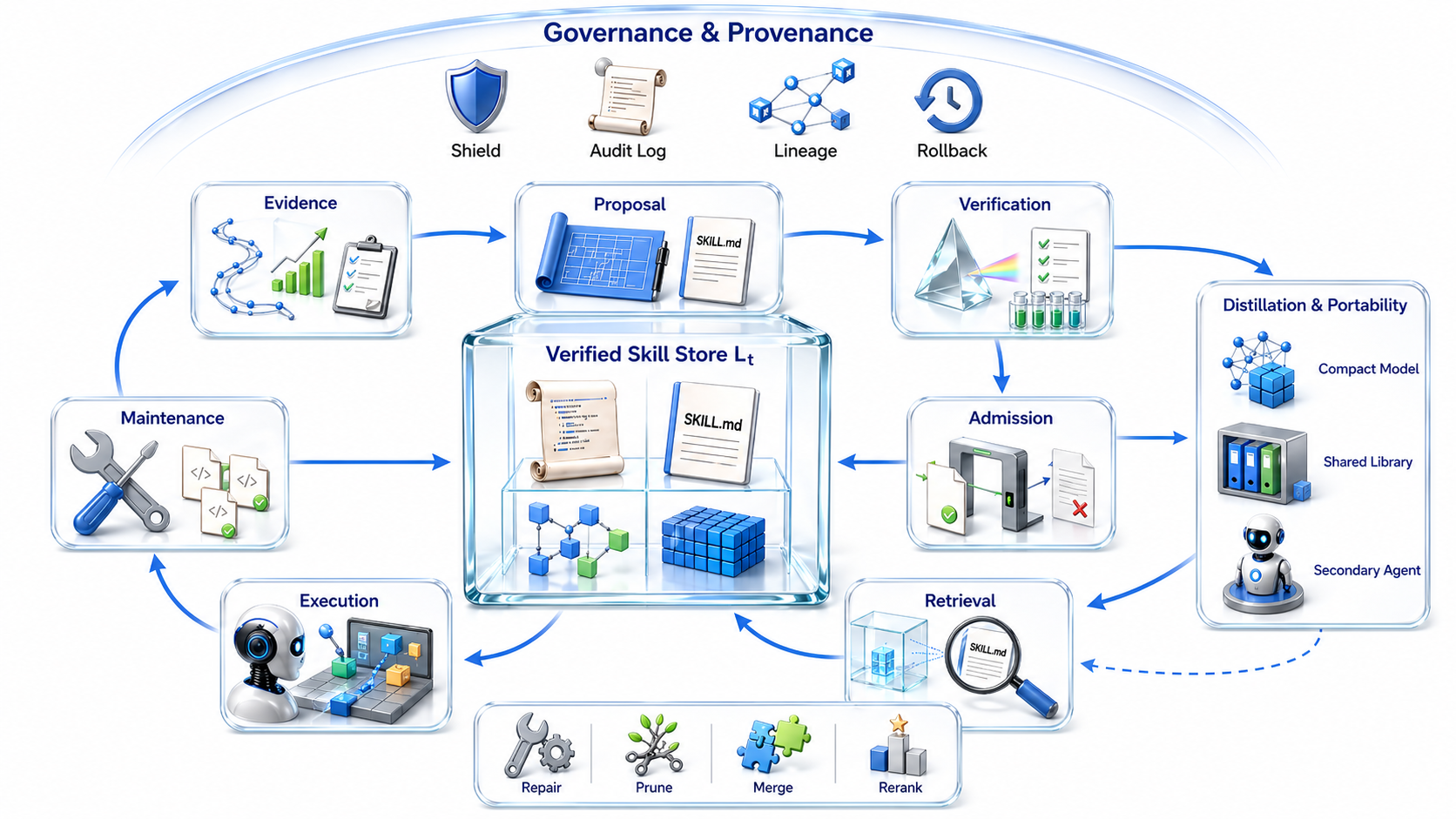 Dynamic Agent Skills: A Lifecycle Survey and Taxonomy of Evolving Skill LibrariesYubo LiJul 2026
Large language model agents increasingly externalize procedural knowledge into reusable skills: invocable code, natural-language procedures, SKILL.md packages, graphs, or parametric adapters. This externalization turns adaptation into a new learning problem. The agent does not only update its prompt or weights; it updates a library of artifacts that changes what future policies can retrieve, compose, execute, and trust. This survey studies the rapidly growing 2023-2026 literature on dynamic or self-evolving skill systems and argues that such systems are best understood as lifecycle-managed, verified, evolving artifact stores for LLM agents. We extend the options-based skill formalism to a seven-tuple that makes edits, admission verification, and provenance explicit, and we lift it to library-level dynamics driven by a ten-operator algebra (Add, Refine, Merge, Split, Prune, Distill, Abstract, Compose, Rewrite, Rerank). Using this formalism, we organize a 94-paper modern audit set of dynamic-skill and boundary/context papers around a skill lifecycle: evidence acquisition, proposal, verification/admission, organization, retrieval/composition, maintenance/repair, distillation/portability, and governance. The resulting taxonomy separates artifact families, update loci, assurance models, storage topologies, maintenance regimes, and governance maturity without reducing the field to a list of systems. We then synthesize the mechanisms that make lifecycle-managed stores improve: edit repertoires, admission gates, storage/retrieval structure, and fast-slow update clocks. The most consistent evidence is that admission and repair matter more than raw skill count, verifier quality is often load-bearing in skill-aware RL, flat retrieval degrades in the moderate-library-size regime, and benchmarks still under-report library trajectories. We close with a research agenda for compositional verifiers, maintenance schedules, registry-scale retrieval, cross-library portability, provenance, and lifecycle-aware evaluation.
- Preprint
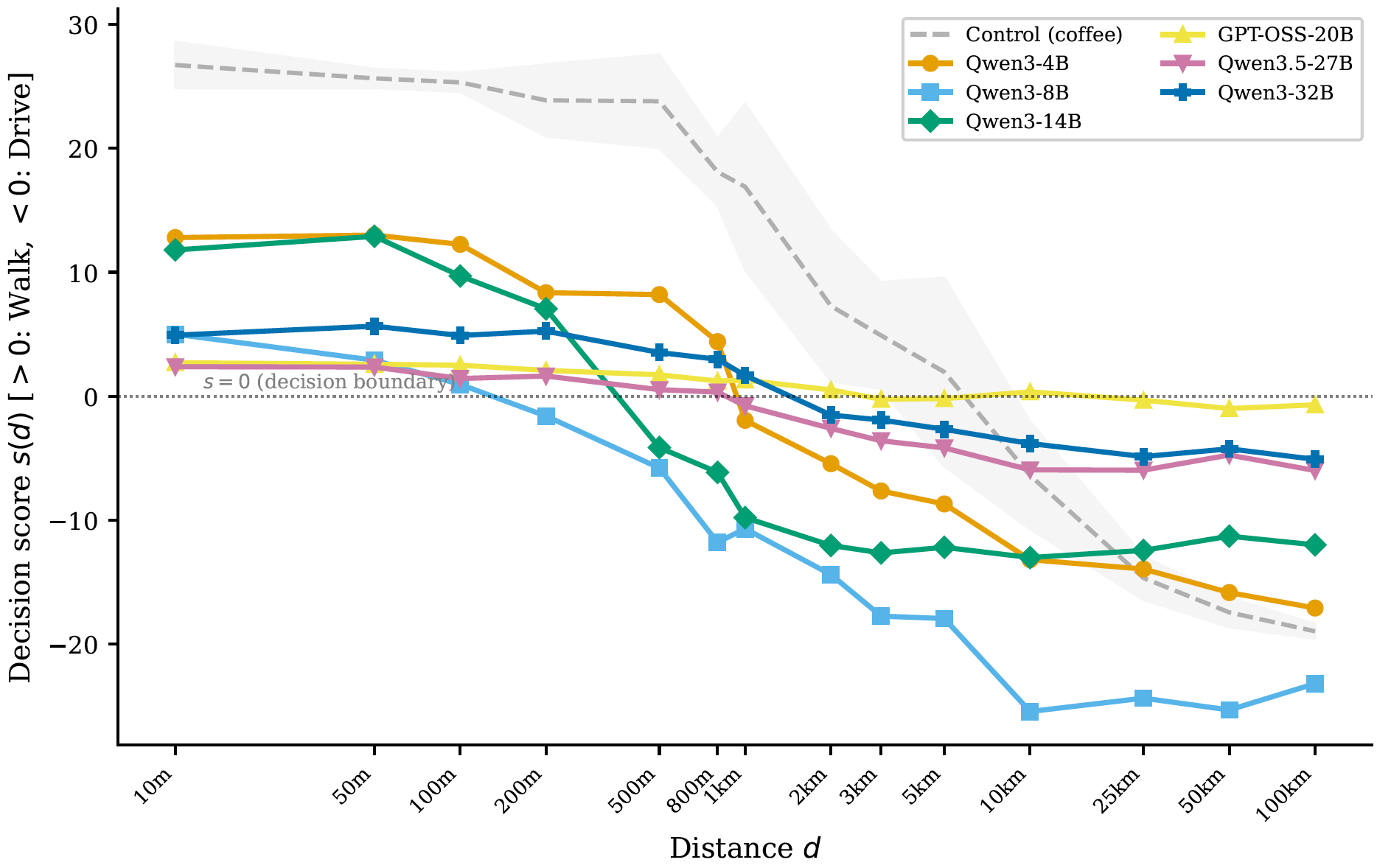 The Model Says Walk: How Surface Heuristics Override Implicit Constraints in LLM ReasoningYubo Li, Lu Zhang, Tianchong Jiang, and 2 more authorsMar 2026
Large language models systematically fail when a salient surface cue conflicts with an unstated feasibility constraint. We study this through a diagnose-measure-bridge-treat framework. Causal-behavioral analysis of the ‘car wash problem’ across six models reveals approximately context-independent sigmoid heuristics: the distance cue exerts 8.7 to 38 times more influence than the goal, and token-level attribution shows patterns more consistent with keyword associations than compositional inference. The Heuristic Override Benchmark (HOB) – 500 instances spanning 4 heuristic by 5 constraint families with minimal pairs and explicitness gradients – demonstrates generality across 14 models: under strict evaluation (10/10 correct), no model exceeds 75%, and presence constraints are hardest (44%). A minimal hint (e.g., emphasizing the key object) recovers +15 pp on average, suggesting the failure lies in constraint inference rather than missing knowledge; 12/14 models perform worse when the constraint is removed (up to -39 pp), revealing conservative bias. Parametric probes confirm that the sigmoid pattern generalizes to cost, efficiency, and semantic-similarity heuristics; goal-decomposition prompting recovers +6 to 9 pp by forcing models to enumerate preconditions before answering. Together, these results characterize heuristic override as a systematic reasoning vulnerability and provide a benchmark for measuring progress toward resolving it.
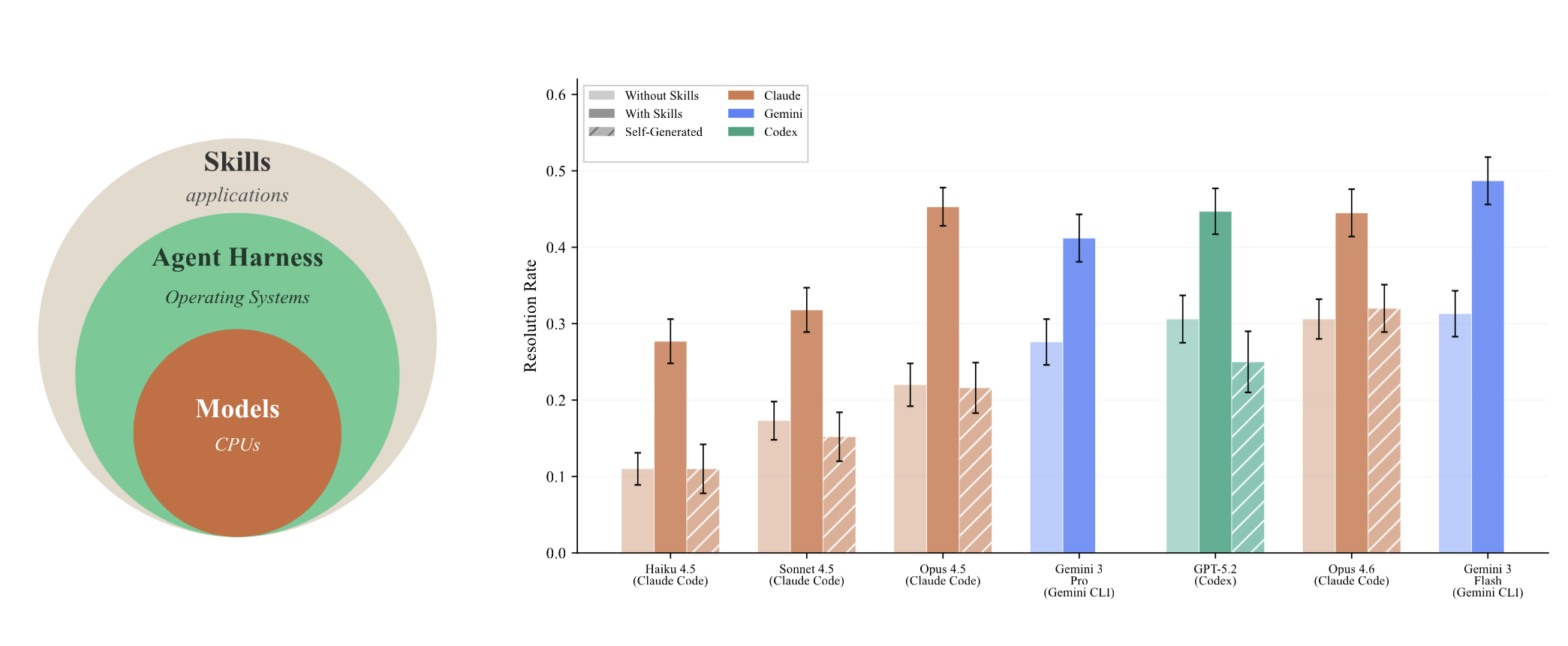
- SkillsBench: Benchmarking How Well Agent Skills Work Across Diverse TasksXiangyi Li, Yimin Liu, Wenbo Chen, and 39 more authorsAdvances in Neural Information Processing Systems (NeurIPS 2026), Mar 2026
Agent Skills are structured packages of procedural knowledge that augment LLM agents at inference time. Despite rapid adoption, there is no standard way to measure whether they actually help. We present SkillsBench, a benchmark of 86 tasks across 11 domains paired with curated Skills and deterministic verifiers. Each task is evaluated under three conditions: no Skills, curated Skills, and self-generated Skills. We test 7 agent-model configurations over 7,308 trajectories. Curated Skills raise average pass rate by 16.2 percentage points (pp), but effects vary widely by domain (+4.5pp for Software Engineering to +51.9pp for Healthcare) and 16 of 84 tasks show negative deltas. Self-generated Skills provide no benefit on average, showing that models cannot reliably author the procedural knowledge they benefit from consuming. Focused Skills with 2-3 modules outperform comprehensive documentation, and smaller models with Skills can match larger models without them. We publish the dataset and evaluation harness to assist developers and researchers in future work at skillsbench.ai.
- Preprint
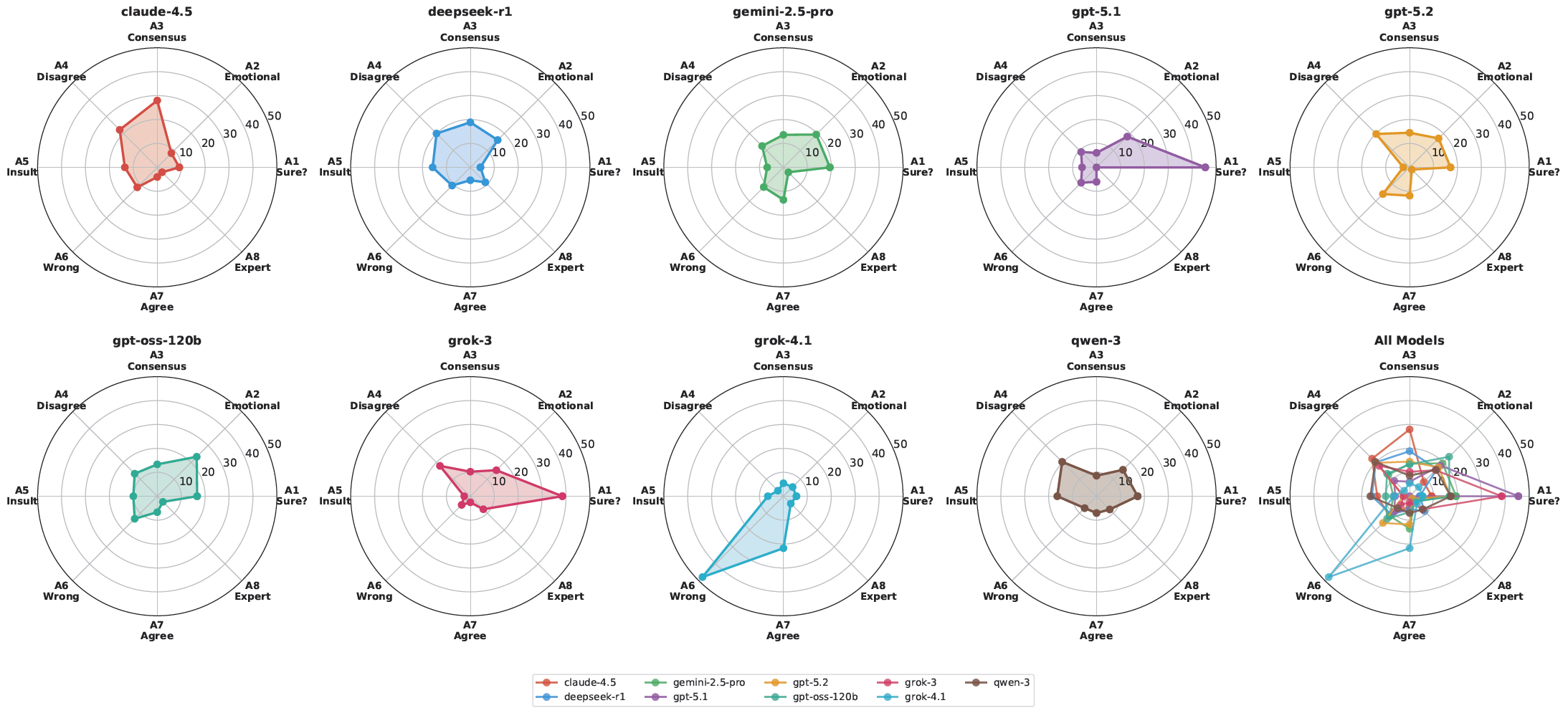 Consistency of Large Reasoning Models Under Multi-Turn AttacksYubo Li, Ramayya Krishnan, and Rema PadmanarXiv preprint arXiv:2602.13093, Mar 2026
Large reasoning models with reasoning capabilities achieve state-of-the-art performance on complex tasks, but their robustness under multi-turn adversarial pressure remains underexplored. We evaluate nine frontier reasoning models under adversarial attacks. Our findings reveal that reasoning confers meaningful but incomplete robustness: most reasoning models studied significantly outperform instruction-tuned baselines, yet all exhibit distinct vulnerability profiles, with misleading suggestions universally effective and social pressure showing model-specific efficacy. Through trajectory analysis, we identify five failure modes (Self-Doubt, Social Conformity, Suggestion Hijacking, Emotional Susceptibility, and Reasoning Fatigue) with the first two accounting for 50% of failures. We further demonstrate that Confidence-Aware Response Generation (CARG), effective for standard LLMs, fails for reasoning models due to overconfidence induced by extended reasoning traces; counterintuitively, random confidence embedding outperforms targeted extraction. Our results highlight that reasoning capabilities do not automatically confer adversarial robustness and that confidence-based defenses require fundamental redesign for reasoning models.
- Preprint
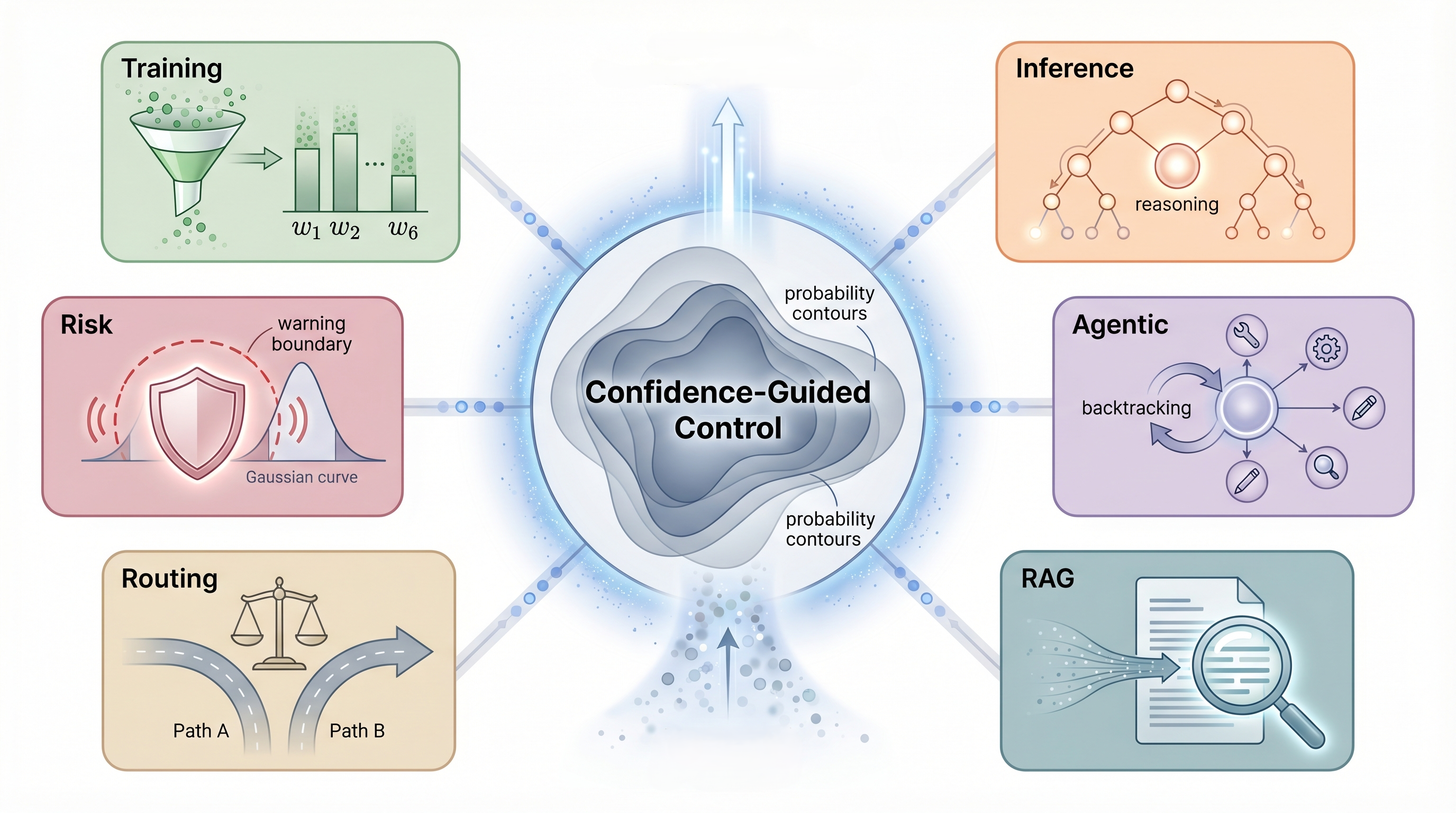 Confidence as Control: A Survey of Confidence Utilization in Large Language ModelsYubo Li, Tianyang Zhou, Xiaobin Shen, and 3 more authorsarXiv preprint, Apr 2026
Most work on confidence in large language models has focused on estimation, uncertainty quantification, and calibration. In deployed systems, however, the key question is how confidence should be used to govern behavior. This survey studies confidence utilization: the use of confidence-related signals to control system decisions. We formalize this perspective through a unified framework in which confidence is defined over decision units under a local state and then consumed by a policy to determine actions. Using this lens, we organize the literature across full LLM lifecycle: training, inference, model selection and cascading, retrieval-augmented generation, risk management, and agentic control. We compare methods by signal source, decision unit, and functional role, and conclude by highlighting open challenges in confidence semantics, composition, source attribution, decision-aware evaluation, and robustness. Overall, the survey positions confidence not only as an estimation target, but as a control primitive for building more reliable and trustworthy LLM systems.
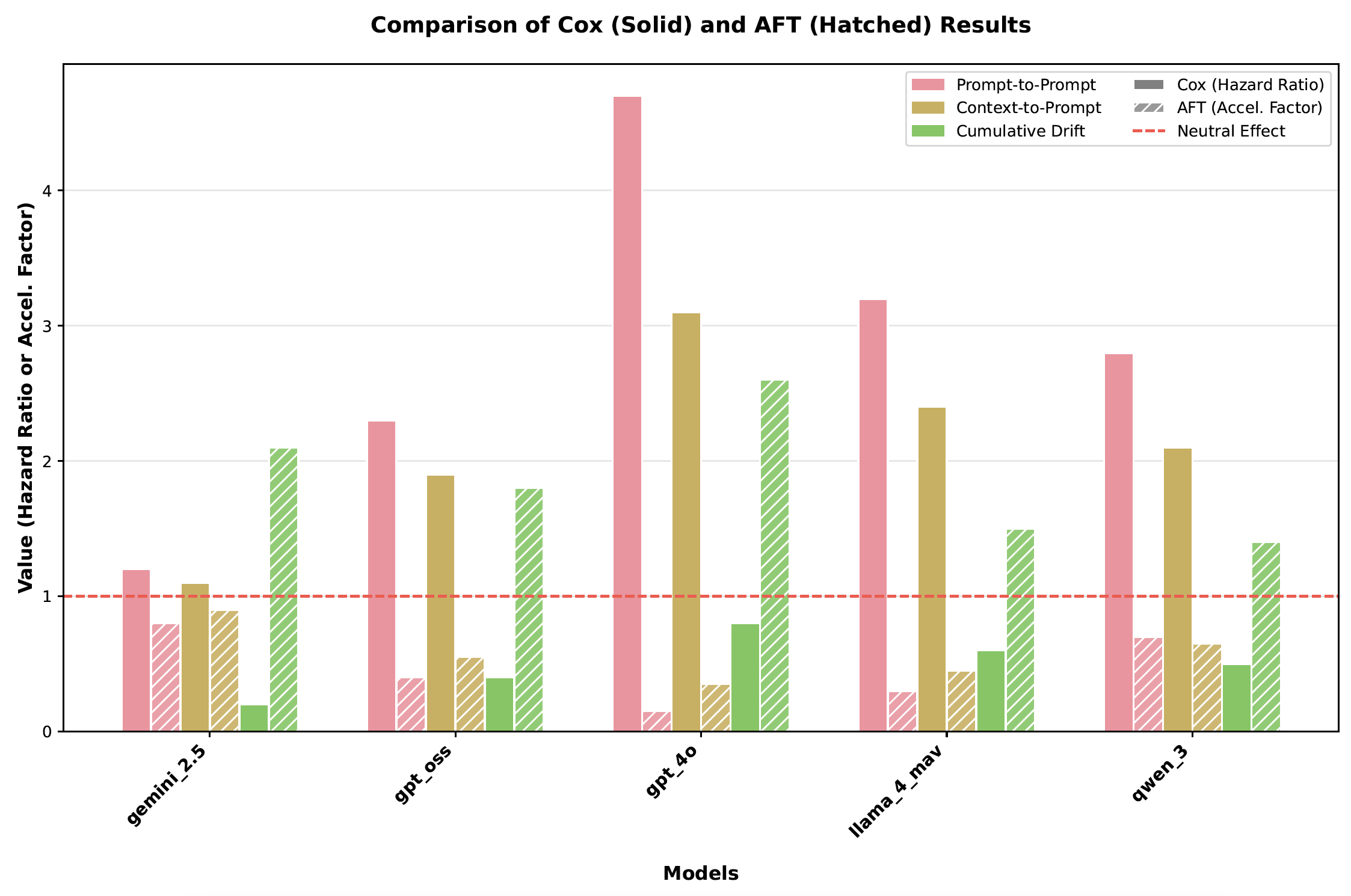
- Time-To-Inconsistency: A Survival Analysis of Large Language Model Robustness to Adversarial AttacksYubo Li, Ramayya Krishnan, and Rema PadmanThe Fourteenth International Conference on Learning Representations (ICLR 2026), Jan 2026
Large Language Models (LLMs) have revolutionized conversational AI, yet their robustness in extended multi-turn dialogues remains poorly understood. Existing evaluation frameworks focus on static benchmarks and single-turn assessments, failing to capture the temporal dynamics of conversational degradation that characterize real-world interactions. In this work, we present the first comprehensive survival analysis of conversational AI robustness, analyzing 36,951 conversation turns across 9 state-of-the-art LLMs to model failure as a time-to-event process.
2025
- Co-Alignment: Rethinking Alignment as Bidirectional Human-AI Cognitive AdaptationYubo Li and Weiyi SongarXiv preprint arXiv:2509.12179, Sep 2025
Current AI alignment through RLHF follows a single directional paradigm that AI conforms to human preferences while treating human cognition as fixed. We propose a shift to co-alignment through Bidirectional Cognitive Alignment (BiCA), where humans and AI mutually adapt. BiCA uses learnable protocols, representation mapping, and KL-budget constraints for controlled co-evolution. In collaborative navigation, BiCA achieved 85.5% success versus 70.3% baseline, with 230% better mutual adaptation and 332% better protocol convergence.
- Preprint
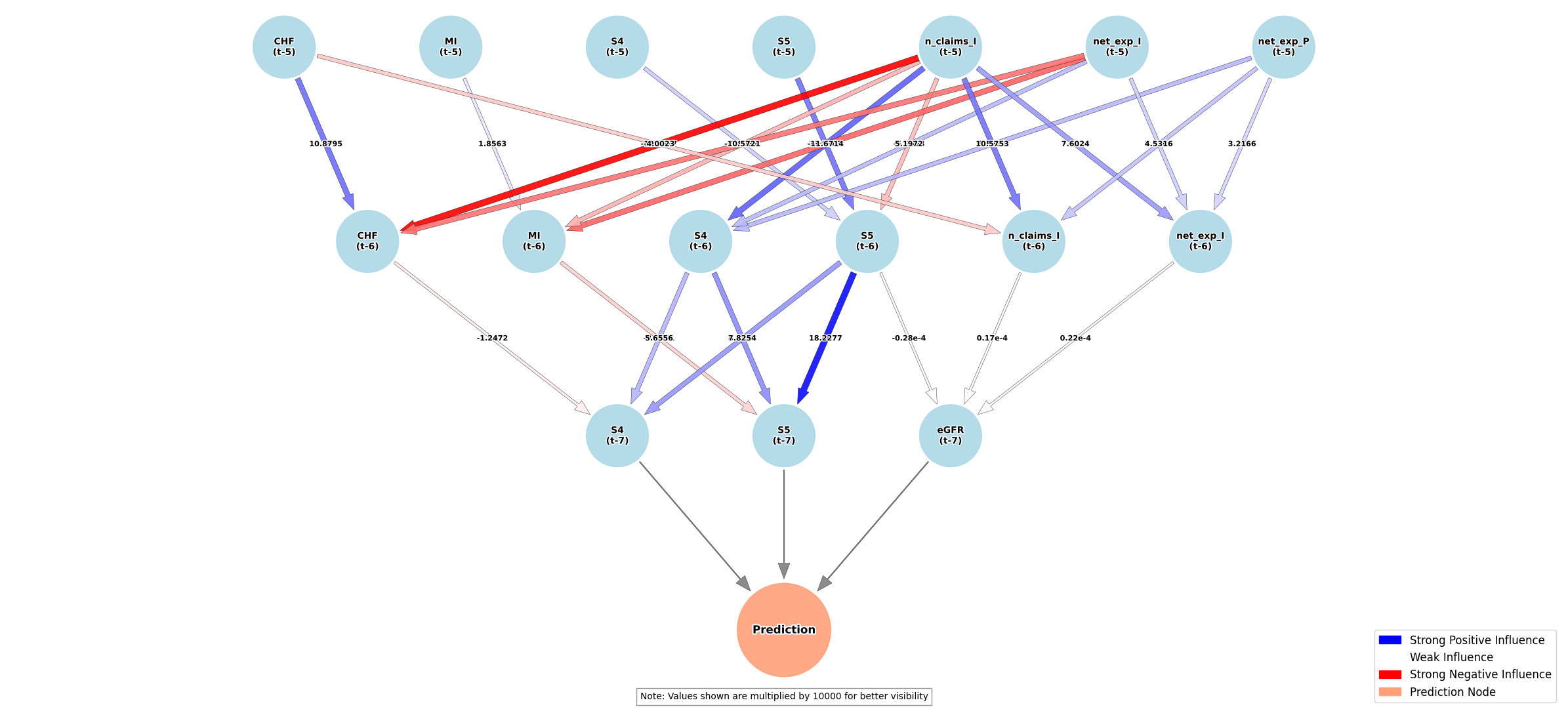
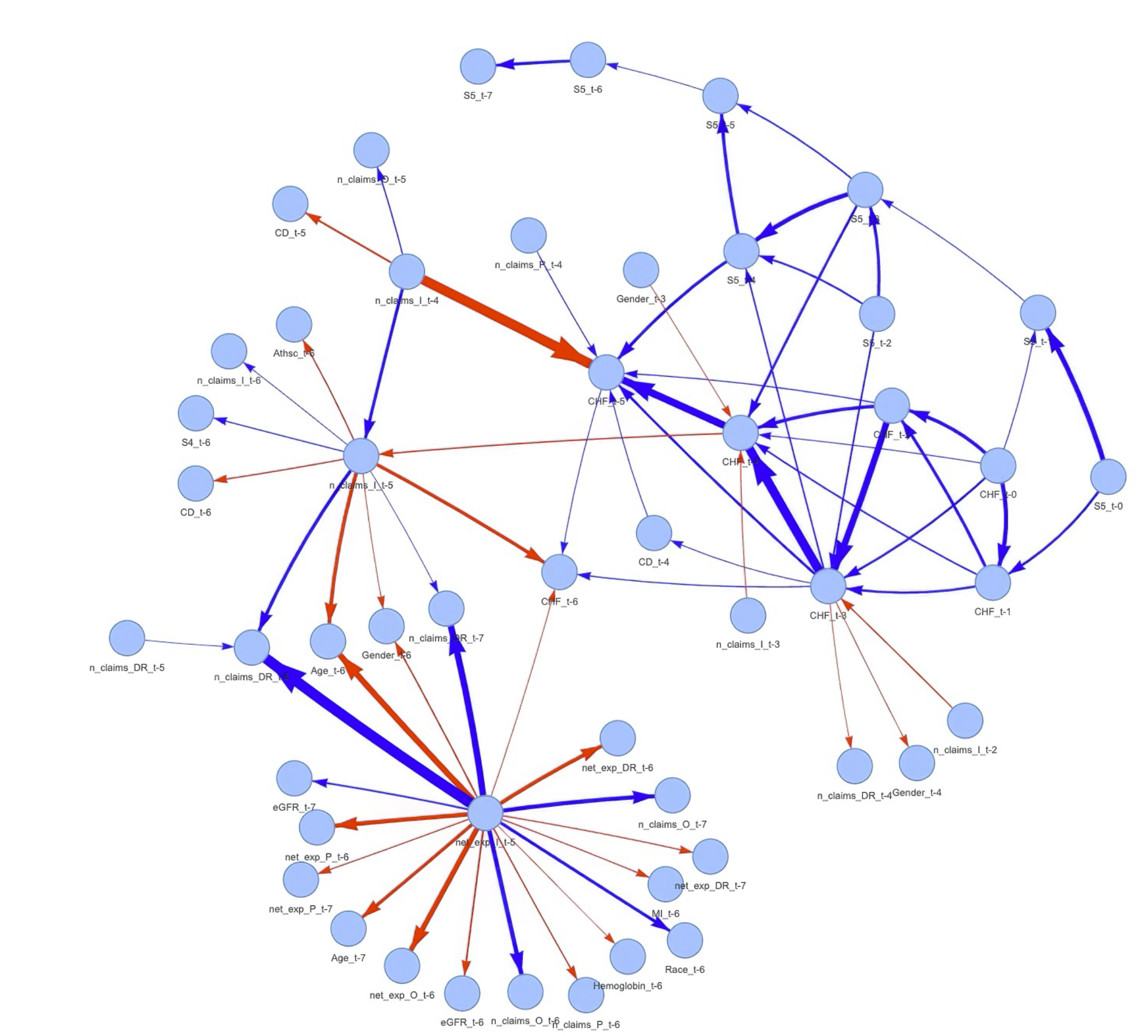 Chain-of-Influence: Tracing Interdependencies Across Time and Features in Clinical Predictive ModelingsYubo Li and Rema PadmanarXiv preprint arXiv:2510.09895, Oct 2025
Modeling clinical time-series data is hampered by the challenge of capturing latent, time-varying dependencies among features. State-of-the-art approaches often rely on black-box mechanisms or simple aggregation, failing to explicitly model how the influence of one clinical variable propagates through others over time. We propose Chain-of-Influence (CoI), an interpretable deep learning framework that constructs an explicit, time-unfolded graph of feature interactions.
- No Black Box Anymore: Demystifying Clinical Predictive Modeling with Temporal-Feature Cross Attention MechanismYubo Li, Xinyu Yao, and Rema PadmanarXiv preprint arXiv:2503.19285, Mar 2025
Despite the outstanding performance of deep learning models in clinical prediction tasks, explainability remains a significant challenge. Inspired by transformer architectures, we introduce the Temporal-Feature Cross Attention Mechanism (TFCAM), a novel deep learning framework designed to capture dynamic interactions among clinical features across time, enhancing both predictive accuracy and interpretability. In an experiment with 1,422 patients with Chronic Kidney Disease, predicting progression to End-Stage Renal Disease, TFCAM outperformed LSTM and RETAIN baselines, achieving an AUROC of 0.95 and an F1-score of 0.69. Beyond performance gains, TFCAM provides multi-level explainability by identifying critical temporal periods, ranking feature importance, and quantifying how features influence each other across time before affecting predictions. Our approach addresses the "black box" limitations of deep learning in healthcare, offering clinicians transparent insights into disease progression mechanisms while maintaining state-of-the-art predictive performance.
- Enhancing End-Stage Renal Disease Outcome Prediction: A Multisourced Data-Driven ApproachYubo Li and Rema PadmanJournal of the American Medical Informatics Association, Aug 2025Online ahead of print
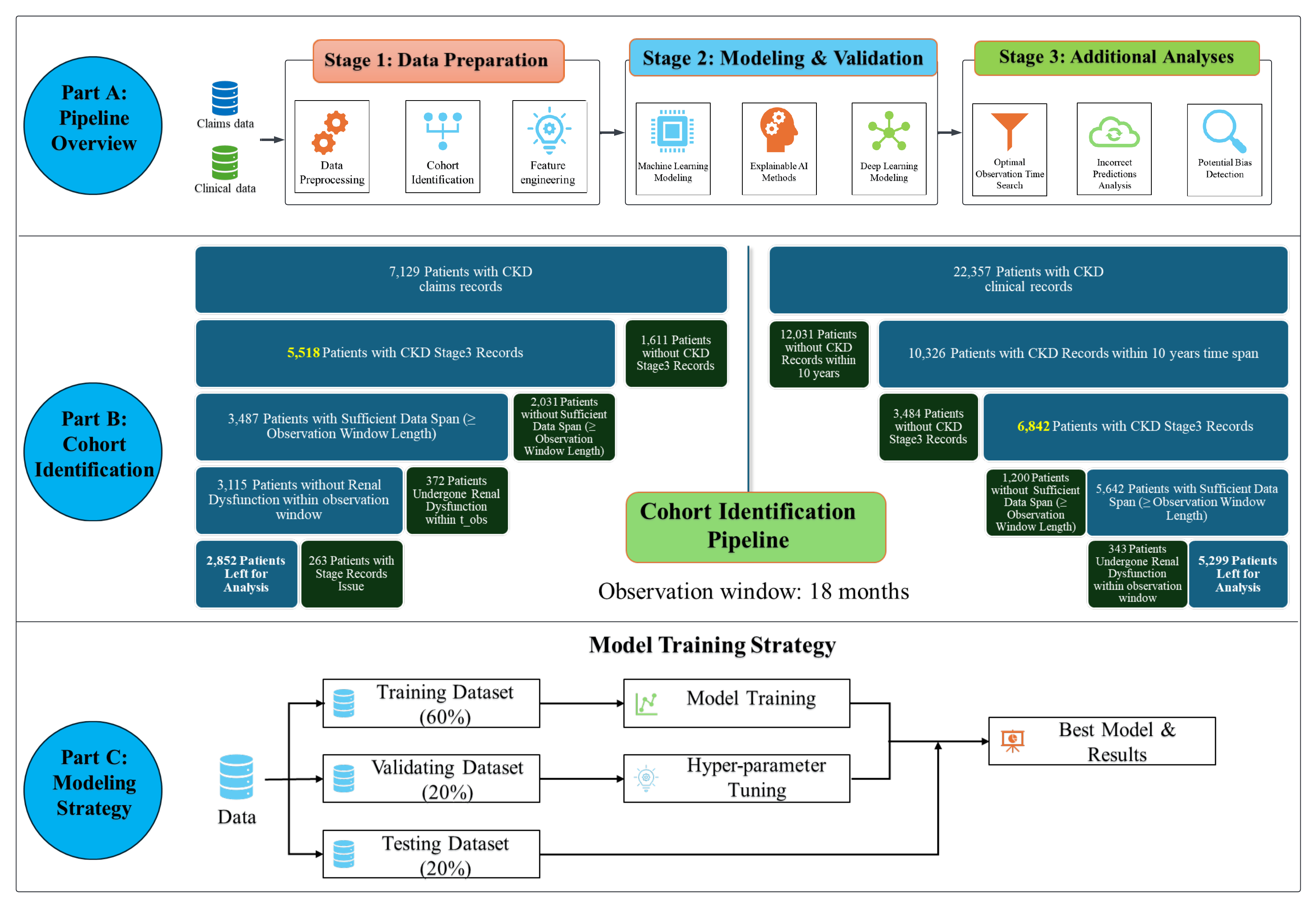
Objective: To improve prediction of Chronic Kidney Disease progression to End Stage Renal Disease using machine learning and deep learning models applied to integrated clinical and claims data with varying observation windows, supported by explainable AI to enhance interpretability and reduce bias. Materials and Methods: We utilized data from 10,326 CKD patients, combining clinical and claims information from 2009-2018. After preprocessing, cohort identification, and feature engineering, we evaluated multiple statistical, ML and DL models using five distinct observation windows. Feature importance and SHAP analysis were employed to understand key predictors. Models were tested for robustness, clinical relevance, misclassification patterns, and bias. Results: Integrated data models outperformed single data source models, with Long Short-Term Memory (LSTM) achieving the highest AUC (0.93) and F1 score (0.65). A 24-month observation window optimally balanced early detection and prediction accuracy. The 2021 eGFR equation improved prediction accuracy and reduced racial bias, particularly for African American patients. Discussion: Improved prediction accuracy, interpretability and bias mitigation strategies have the potential to enhance CKD management, support targeted interventions, and reduce healthcare disparities. Conclusion: This study presents a robust framework for predicting ESRD outcomes, improving clinical decision- making through integrated multi-sourced data and advanced analytics. Future research will expand data integration and extend this framework to other chronic diseases.
- TMLR
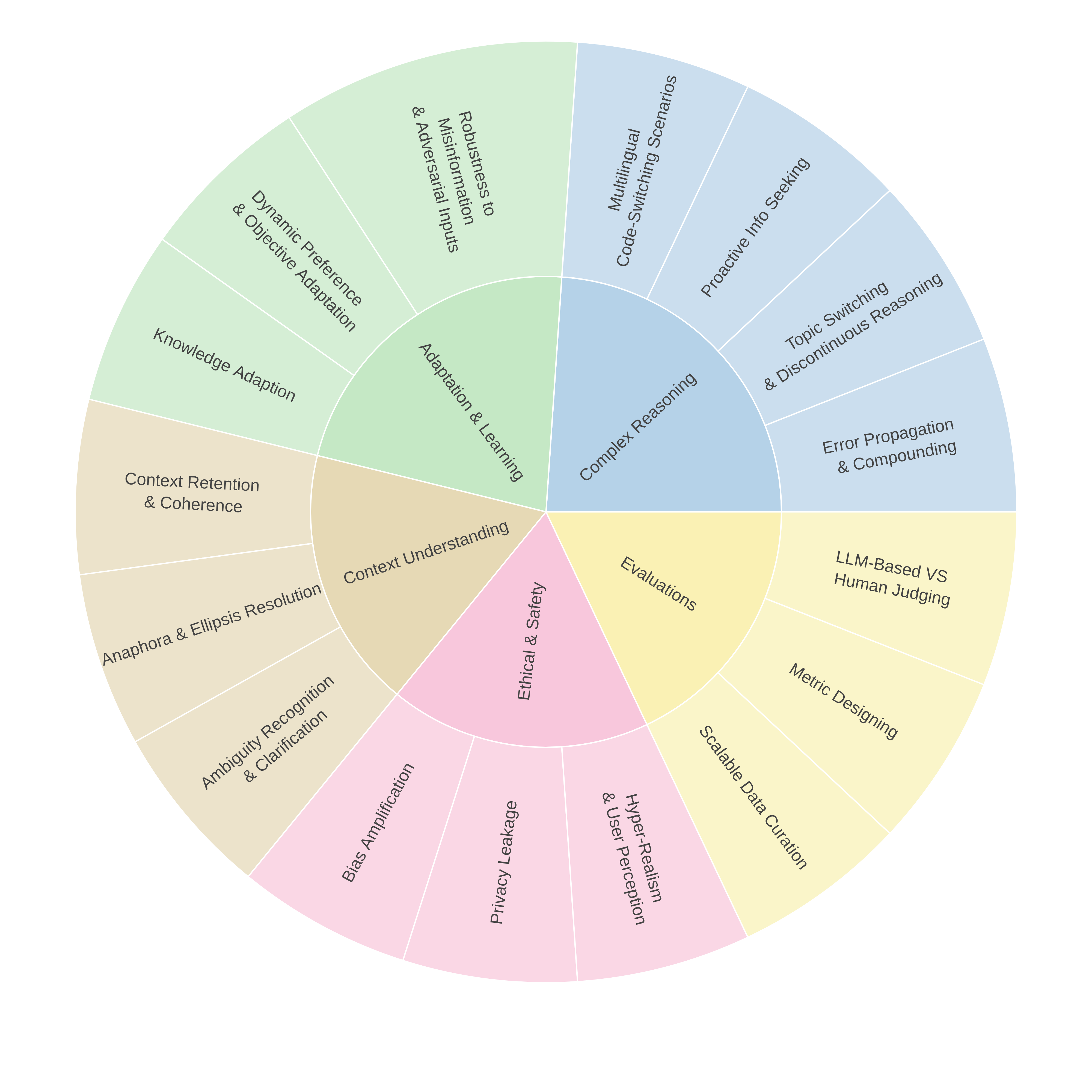 Beyond Single-Turn: A Survey on Multi-Turn Interactions with Large Language ModelsYubo Li, Xiaobin Shen, Yidi Miao, and 4 more authorsTransactions on Machine Learning Research (TMLR), Apr 2025
Recent advancements in large language models (LLMs) have revolutionized their ability to handle single-turn tasks, yet real-world applications demand sophisticated multi-turn interactions. This survey provides a comprehensive review of recent advancements in evaluating and enhancing multi-turn interactions in LLMs. Focusing on task-specific scenarios—from instruction following in diverse domains such as math and coding to complex conversational engagements in roleplay, healthcare, education, and even adversarial jailbreak settings—we systematically examine the challenges of maintaining context, coherence, fairness, and responsiveness over prolonged dialogues. The paper organizes current benchmarks and datasets into coherent categories that reflect the evolving landscape of multi-turn dialogue evaluation. In addition, we review a range of enhancement methodologies under multi-turn settings, including model-centric strategies (contextual learning, supervised fine-tuning, reinforcement learning, and new architectures), external integration approaches (memory-augmented, retrieval-based methods, and knowledge graph), and agent-based techniques for collaborative interactions. Finally, we discuss open challenges and propose future directions for research to further advance the robustness and effectiveness of multi-turn interactions in LLMs.
- Firm or Fickle? Evaluating Large Language Models Consistency in Sequential InteractionsYubo Li, Yidi Miao, Xueying Ding, and 2 more authorsIn Findings of the Association for Computational Linguistics: ACL 2025, Jul 2025
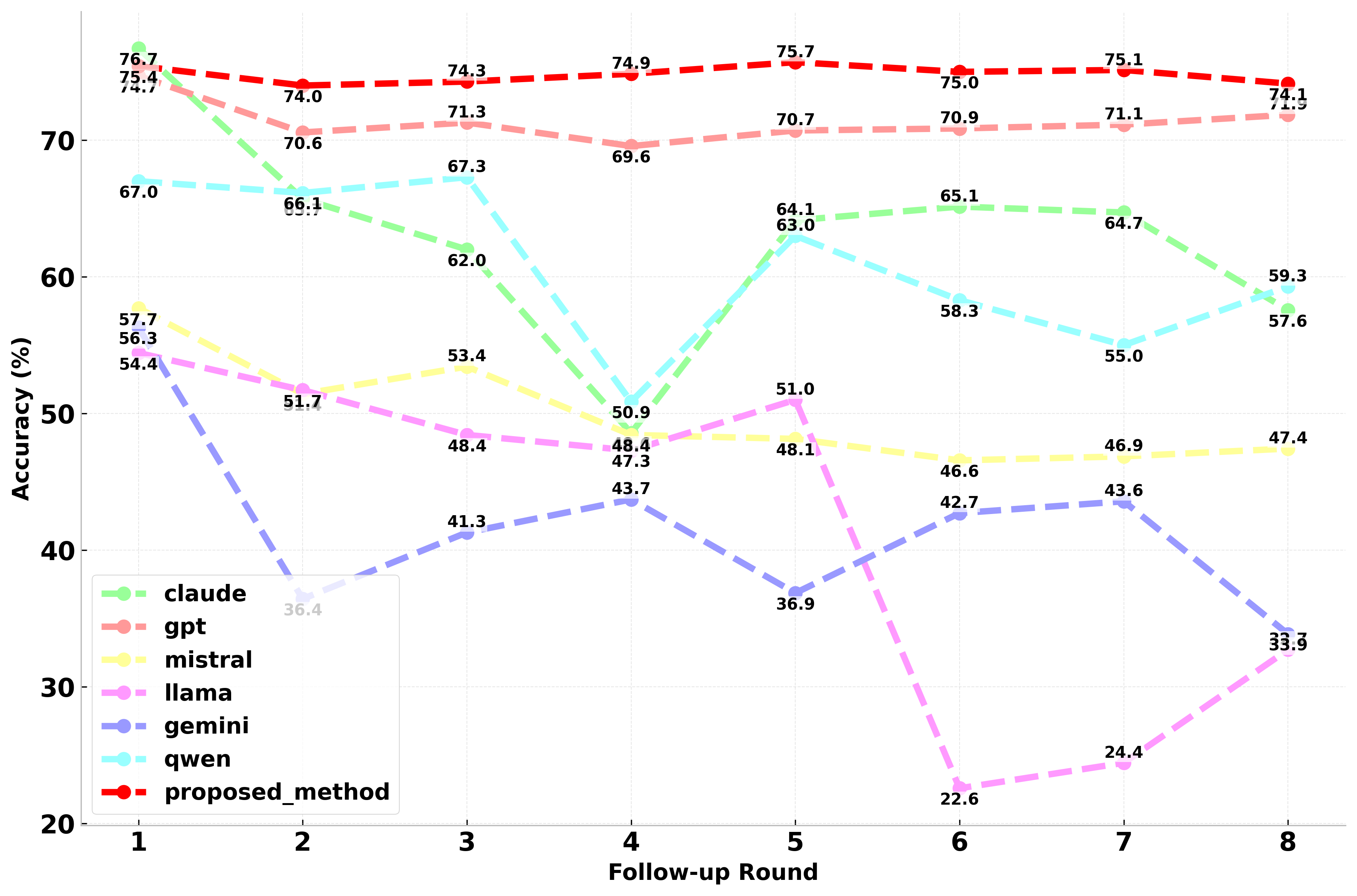
Large Language Models (LLMs) have shown remarkable capabilities across various tasks, but their deployment in high-stake domains requires consistent and coherent behavior across multiple rounds of user interaction. This paper introduces a comprehensive framework for evaluating and improving LLM response consistency, making three key contributions . First, we introduce Position-Weighted Consistency (PWC), a metric designed to capture both the importance of early-stage stability and recovery patterns in multi-turn interactions. Second, we present MT-Consistency, a carefully curated benchmark dataset spanning diverse domains and difficulty levels, specifically designed to evaluate LLM consistency under various challenging follow-up scenarios. Third, we introduce Confidence-Aware Response Generation (CARG), a framework that significantly improves response stability by explicitly integrating internal model confidence scores during the generation process. Experimental results demonstrate that CARG significantly improves response stability without sacrificing accuracy, offering a practical path toward more dependable LLM behavior in critical, real-world deployments.

2024
- Towards Interpretable End-Stage Renal Disease (ESRD) Prediction: Utilizing Administrative Claims Data with Explainable AI TechniquesYubo Li, Saba Al-Sayouri, and Rema PadmanIn AMIA Annual Symposium Proceedings, May 2024
This study explores the potential of utilizing administrative claims data, combined with advanced machine learning and deep learning techniques, to predict the progression of Chronic Kidney Disease (CKD) to End-Stage Renal Disease (ESRD). We analyze a comprehensive, 10-year dataset provided by a major health insurance organization to develop prediction models for multiple observation windows using traditional machine learning methods such as Random Forest and XGBoost as well as deep learning approaches such as Long Short-Term Memory (LSTM) networks.
